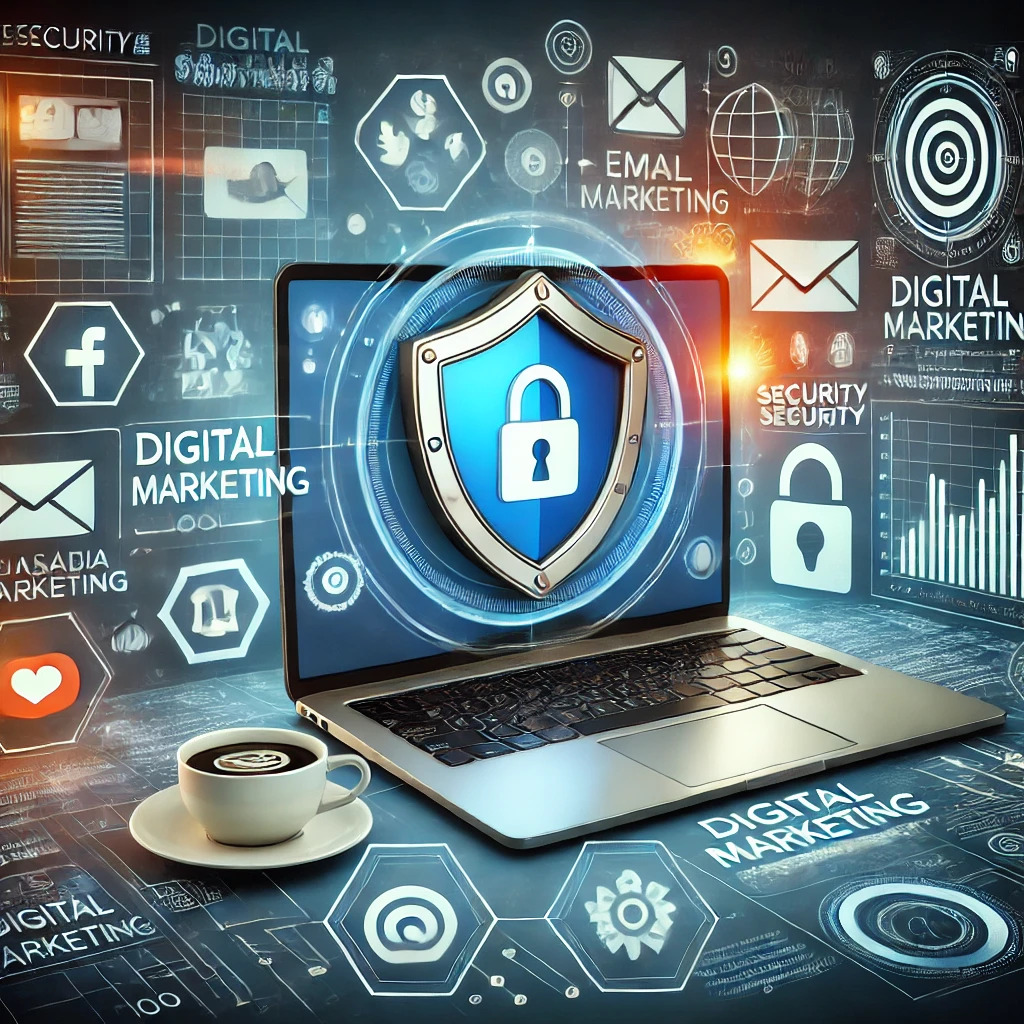
Cybersecurity for marketers is crucial in the digital age because marketing teams manage customer information, advertising accounts, email databases, website integrations, and other digital assets that can become targets for cyberattacks. A security breach can expose sensitive data, disrupt campaigns, damage brand reputation, and undermine customer trust. By implementing strong access controls, securing marketing tools, training employees, and following responsible data practices, businesses can protect their digital marketing operations while building stronger relationships with customers.
What Is Cybersecurity in Digital Marketing?
Cybersecurity in digital marketing refers to the practices, technologies, and policies used to protect marketing platforms, customer information, digital assets, and campaign operations from unauthorized access, fraud, data theft, and other security threats.
Modern marketing depends on interconnected systems. A typical marketing team may use a content management system, customer relationship management (CRM) software, email marketing tools, social media platforms, advertising accounts, analytics dashboards, and third-party integrations. Each system can introduce security risks if it is poorly configured or inadequately protected.
For example, if a cybercriminal gains access to a company's email marketing platform, they might send fraudulent messages to subscribers. If an attacker compromises a website administrator account, they could modify website content, inject malicious code, or attempt to steal customer information.
Cybersecurity therefore needs to be part of the marketing workflow rather than a concern reserved exclusively for the IT department. Marketing teams can strengthen their protection by combining secure technology, responsible data handling, and clear internal procedures.
Why Is Cybersecurity for Marketers So Important?
Marketing activities increasingly rely on collecting, storing, analyzing, and sharing digital information. This creates opportunities for better personalization and campaign measurement, but it also increases the importance of protecting customer data and business accounts.
Cybersecurity matters to marketers for several reasons:
- Protecting customer information: Marketing databases may contain names, email addresses, purchase histories, preferences, and other personal information.
- Preventing account takeovers: Compromised advertising or social media accounts can be used to publish unauthorized content or launch fraudulent campaigns.
- Maintaining business continuity: Security incidents can interrupt website operations, lead generation, email delivery, and paid advertising.
- Preserving brand reputation: Customers may lose confidence in a business that fails to protect their information or communicate transparently after an incident.
- Reducing financial losses: Fraud, recovery expenses, advertising misuse, and operational disruption can create significant costs.
- Supporting legal and regulatory compliance: Businesses must handle personal information according to applicable privacy, security, and data-protection requirements.
A security-conscious marketing strategy helps organizations reduce avoidable risks while maintaining the customer experience that their campaigns are designed to deliver.
7 Major Cybersecurity Threats Facing Digital Marketers
1. Phishing and Social Engineering
Phishing is a common attack method in which criminals attempt to trick people into revealing credentials, opening malicious attachments, or visiting fraudulent websites. Social engineering is a broader category of manipulation that exploits human behavior rather than relying exclusively on technical vulnerabilities.
Marketing teams may receive convincing messages claiming to come from advertising platforms, social networks, clients, vendors, or senior managers. These messages might warn that an account will be suspended, request an urgent invoice payment, or ask the recipient to review a shared campaign document.
Clicking a malicious link or entering credentials into a fake login page can give attackers access to valuable marketing accounts.
How to reduce the risk:
- Verify unexpected requests through a separate, trusted communication channel.
- Check sender addresses and website domains carefully.
- Avoid opening unexpected attachments or entering credentials through email links.
- Report suspicious messages to the appropriate security contact.
- Provide regular phishing-awareness training for marketing employees.
Employees should be encouraged to report suspicious messages promptly without fear of blame. Early reporting can help an organization respond before an attack causes greater damage.
2. Weak Passwords and Compromised Marketing Accounts
Marketing teams often manage multiple accounts across advertising networks, social media platforms, analytics tools, email services, and content management systems. Reusing passwords or sharing login credentials can make these accounts easier to compromise.
If attackers obtain a reused password from a breached service, they may try it against other platforms. A compromised account could allow unauthorized advertisements, changes to billing settings, fraudulent posts, or access to customer information.
Businesses should adopt several basic account-security measures:
- Use long, unique passwords for every important account.
- Store credentials in an approved password manager.
- Enable multifactor authentication (MFA), preferably using phishing-resistant methods where available.
- Give each employee an individual account rather than sharing a single login.
- Remove access promptly when employees or contractors leave.
Organizations should also review account permissions regularly. A content editor does not necessarily need administrator access to a website, and an employee managing social posts may not need access to advertising billing information.
3. Data Breaches and Customer Information Exposure
Marketing systems may contain personal data collected through newsletter subscriptions, lead forms, customer accounts, event registrations, and online purchases. If these systems are compromised or data is shared incorrectly, sensitive information may be exposed.
For example, a poorly secured lead database could reveal contact information and details about customers' interests. An unsecured integration might transfer more information than a marketing platform actually requires.
Data exposure can lead to customer complaints, fraudulent messages, reputational damage, and legal obligations depending on the nature of the incident and applicable law.
Marketers can help reduce these risks by:
- Collecting only the information needed for a defined purpose.
- Restricting access to customer records based on job responsibilities.
- Using approved systems to store and transfer data.
- Reviewing third-party integrations and export permissions.
- Following documented retention and deletion policies.
- Escalating suspected data exposure immediately.
Marketing teams should coordinate with security, legal, and privacy professionals when handling sensitive data or responding to a potential breach.
4. Website Vulnerabilities and Malicious Code
A company's website is often the center of its digital marketing activity. It hosts landing pages, collects leads, supports online sales, and connects visitors with business services. Vulnerabilities in website software, plugins, themes, or server configurations can expose these functions to attack.
Common risks include outdated software, insecure administrator accounts, excessive user permissions, vulnerable plugins, and poorly protected forms. Attackers may exploit these weaknesses to modify website content, redirect visitors, inject malicious scripts, or disrupt operations.
Businesses using content management systems such as WordPress should establish a reliable maintenance process that includes:
- Installing security updates for the core platform, themes, and plugins.
- Removing unused themes, plugins, and user accounts.
- Using strong authentication and appropriate administrator permissions.
- Maintaining tested backups stored separately from the main website.
- Using HTTPS and secure hosting configurations.
- Monitoring website activity and investigating unusual changes.
Website maintenance should be coordinated with marketing launch schedules so that updates and security checks do not unnecessarily interrupt important campaigns. A secure, well-maintained website also supports a reliable user experience and protects the business's online reputation.
5. Advertising Fraud and Unauthorized Campaign Spending
Digital advertising accounts can be attractive targets because they may contain billing details, audience information, campaign assets, and permissions to spend substantial budgets.
If an attacker gains access to an advertising account, they could launch unauthorized campaigns, change targeting settings, modify landing page destinations, or misuse payment methods. Advertising fraud can also occur through invalid traffic and deceptive activity that inflates clicks or impressions without generating genuine customer interest.
Businesses can reduce these risks by:
- Enabling MFA on advertising and billing accounts.
- Limiting administrative access to trusted personnel.
- Setting appropriate spending limits and account alerts.
- Reviewing campaign changes and billing activity regularly.
- Investigating unusual traffic spikes or unexpected conversion patterns.
- Removing access for former employees and external partners when it is no longer required.
Campaign reporting should distinguish between activity that appears in a dashboard and genuine business outcomes. Unusual increases in clicks, for example, should be investigated rather than automatically treated as improved campaign performance.
Organizations running paid campaigns can combine these precautions with effective online advertising management to maintain oversight of budgets, performance, and account access.
6. Third-Party Integrations and Vendor Risks
Marketing teams frequently connect their systems to external tools for analytics, customer support, email delivery, lead generation, social scheduling, and campaign automation. These integrations can improve efficiency, but each connection may introduce additional security and privacy considerations.
A third-party application might request broad permissions that exceed its intended function. A vendor could also experience a security incident that affects information shared with the service.
To manage third-party risks:
- Evaluate the vendor's security practices before approving an integration.
- Review requested permissions and grant only those that are necessary.
- Use approved business accounts rather than personal accounts for critical services.
- Review connected applications periodically.
- Understand what information the service collects, stores, and shares.
- Revoke unused integrations and access tokens.
Businesses should maintain an inventory of important marketing tools, their owners, and the data they can access. This makes it easier to review permissions and investigate problems when an incident occurs.
7. AI-Enabled Scams and Deepfake Impersonation
Artificial intelligence can help marketing teams produce content and analyze data, but criminals can also use AI to create convincing phishing messages, imitate a person's voice, generate deceptive images, or impersonate company executives and vendors.
A marketer might receive an apparently urgent request from a manager to purchase advertising credits, transfer funds, or share a confidential campaign file. The message may sound authentic even when the sender is an impostor.
Organizations should establish verification procedures for sensitive requests. Financial transfers, credential disclosures, access changes, and confidential data sharing should require approved authorization steps rather than relying on a familiar voice or convincing message alone.
Marketing teams should also review AI-generated content before publication to detect fabricated claims, unauthorized use of likenesses, misleading imagery, and accidental disclosure of confidential information.
Best Cybersecurity Practices for Marketing Teams
Effective cybersecurity requires consistent habits rather than a single software purchase. Marketing departments can reduce many common risks by establishing clear procedures and coordinating with IT and security professionals.
Use Multifactor Authentication and Strong Access Controls
Enable MFA on email, advertising accounts, social media profiles, website administration, CRM platforms, and other critical systems. Where supported, use passkeys or hardware security keys for stronger protection against phishing.
Follow the principle of least privilege: each person should receive only the permissions necessary to perform their responsibilities. Review access after role changes and remove unnecessary accounts promptly.
Secure Email Marketing Databases
Email subscriber lists are valuable business assets. Protect them with role-based permissions, approved storage systems, secure exports, and appropriate retention policies. Avoid downloading customer lists to personal devices or sharing them through unapproved channels.
Verify that email marketing practices comply with applicable privacy and electronic communications requirements. Maintain clear subscription preferences and use appropriate consent or other lawful grounds for processing personal data.
Businesses can strengthen these workflows through secure, well-governed email marketing practices.
Keep Websites and Marketing Software Updated
Outdated software may contain known vulnerabilities that attackers can exploit. Establish a process for applying security updates, reviewing plugin requirements, testing changes, and confirming that backups can be restored.
For important websites, use a staging environment where appropriate and coordinate updates with the people responsible for campaigns and content publishing.
Train Employees to Recognize Security Threats
Employees should know how to identify suspicious links, verify requests, protect passwords, and report incidents. Training should cover real marketing scenarios, including fake advertising alerts, fraudulent partnership offers, and requests for customer data.
Short, recurring training sessions and practical exercises can help keep security awareness relevant as threats evolve.
Review Data Collection and Privacy Practices
Collect only the information required for legitimate business purposes, explain how it will be used, and apply appropriate safeguards. Review tracking technologies, advertising pixels, analytics integrations, and data-sharing arrangements with privacy and legal specialists.
Businesses should also understand their obligations under applicable data-protection laws, which may depend on the location of the business, the individuals involved, and the type of information being processed.
Prepare an Incident Response Plan
Even well-protected organizations can experience security incidents. A documented response plan helps teams react quickly and reduces confusion when something goes wrong.
The plan should identify who to contact, how to secure compromised accounts, how to preserve relevant evidence, and who is authorized to communicate with customers or external parties. It should also explain when legal, privacy, IT, or specialist incident-response support is required.
How Cybersecurity Supports Customer Trust and Brand Reputation
Customer trust is central to effective digital marketing. People are more likely to engage with a business when they believe their information will be handled responsibly and their interactions will be secure.
A cybersecurity incident can undermine that trust, especially if customers receive fraudulent messages from a compromised brand account or discover that their personal information has been exposed. Recovery may require technical remediation, customer communication, and significant effort to rebuild confidence.
Security practices can support brand reputation in several ways:
- Transparent data practices: Explain what information is collected and how it is used.
- Secure customer interactions: Protect forms, accounts, and communication channels.
- Responsible communication: Avoid misleading claims and handle customer information appropriately.
- Reliable digital services: Maintain website availability and protect campaign integrity.
- Prepared incident response: Respond promptly and appropriately when security problems occur.
Cybersecurity should be viewed as part of the customer experience. A trustworthy marketing operation protects both the information customers share and the integrity of the interactions they have with a brand.
Businesses can complement these efforts with brand monitoring and reputation management to help identify potential reputation issues and maintain a consistent public presence.
Cybersecurity Checklist for Digital Marketers
Use the following checklist to review the basic security of your marketing operations. Organizations with complex systems or sensitive data should work with qualified security professionals to conduct a more comprehensive assessment.
| Security Area | Recommended Action | Review Frequency |
|---|---|---|
| Account access | Enable MFA and review administrator permissions. | Regularly and after staff changes |
| Password security | Use unique passwords stored in an approved password manager. | Ongoing |
| Website security | Update software, remove unused components, and verify backups. | According to a documented maintenance schedule |
| Customer data | Review collection, storage, sharing, and retention practices. | Periodically and after major changes |
| Advertising accounts | Monitor permissions, billing, campaign changes, and alerts. | Regularly |
| Third-party tools | Review integrations, permissions, and vendor access. | Periodically |
| Employee awareness | Provide phishing and data-handling training. | At onboarding and at regular intervals |
| Incident response | Maintain response contacts and test the response process. | Periodically |
Frequently Asked Questions About Cybersecurity for Marketers
1. Why is cybersecurity important for digital marketers?
Cybersecurity protects the customer information, advertising accounts, websites, and digital tools used by marketing teams. Without adequate safeguards, attackers may steal data, misuse advertising budgets, publish fraudulent content, or disrupt campaigns. Strong security practices help protect brand reputation, support business continuity, and maintain customer confidence.
2. What are the most common cybersecurity threats to marketers?
Common threats include phishing, weak or reused passwords, account takeovers, website vulnerabilities, data breaches, advertising fraud, and insecure third-party integrations. AI-enabled impersonation and deceptive messages can introduce additional risks. Marketers can reduce exposure through MFA, employee training, restricted permissions, software updates, and regular account reviews.
3. How can marketers protect customer data?
Marketers should collect only necessary information, use approved systems, restrict access, and protect data during storage and transfer. They should review third-party integrations, apply appropriate retention policies, and follow applicable privacy requirements. Suspected exposure should be reported promptly to the organization's designated security or privacy team.
4. Does cybersecurity affect digital marketing performance?
Yes. Security incidents can interrupt websites, compromise advertising accounts, disrupt email campaigns, and reduce customer confidence. Security measures help protect campaign continuity and the integrity of marketing data. Although they may require additional time and investment, appropriate safeguards can reduce the risk of costly interruptions and reputational damage.
5. What cybersecurity measures should small businesses implement first?
Small businesses should begin by enabling multifactor authentication, using unique passwords, limiting account permissions, updating website software, maintaining tested backups, and training employees to recognize phishing. They should also review customer-data handling and prepare a basic incident response plan. These measures establish a practical foundation before more advanced security investments.
6. How often should marketing teams review their cybersecurity practices?
Cybersecurity reviews should be ongoing, with formal checks scheduled according to the organization's risk level and operating requirements. Review account permissions after staff changes, assess software updates regularly, and examine third-party integrations periodically. Security controls and incident response procedures should also be reassessed when systems, vendors, or data-handling practices change.
Conclusion: Make Cybersecurity Part of Your Marketing Strategy
Cybersecurity for marketers is essential because digital campaigns depend on the safe use of customer information, websites, advertising accounts, email platforms, and third-party tools. A single compromised account or poorly protected database can affect campaign performance, customer trust, and business operations.
By implementing multifactor authentication, limiting access, securing websites, training employees, reviewing integrations, and preparing for incidents, businesses can reduce common security risks. Responsible data practices and coordination between marketing, IT, and privacy teams further strengthen these protections.
Cybersecurity is not separate from digital marketing success. It helps preserve the integrity of campaigns, protects customer relationships, and supports a reliable digital presence. Businesses that make security a regular part of their marketing operations are better prepared to manage risks as digital channels and technologies evolve.
Strengthen Your Digital Marketing Strategy With AiScope Digital
Building a strong digital presence requires more than effective campaigns. Businesses also need reliable websites, consistent messaging, responsible data practices, and a clear strategy for engaging customers online.
AiScope Digital helps businesses develop their online presence through services such as website development, SEO, content marketing, online advertising, and analytics. These services can support a coordinated marketing strategy built around your business goals.
Contact AiScope Digital to discuss your digital marketing objectives and explore practical ways to strengthen your online presence.


