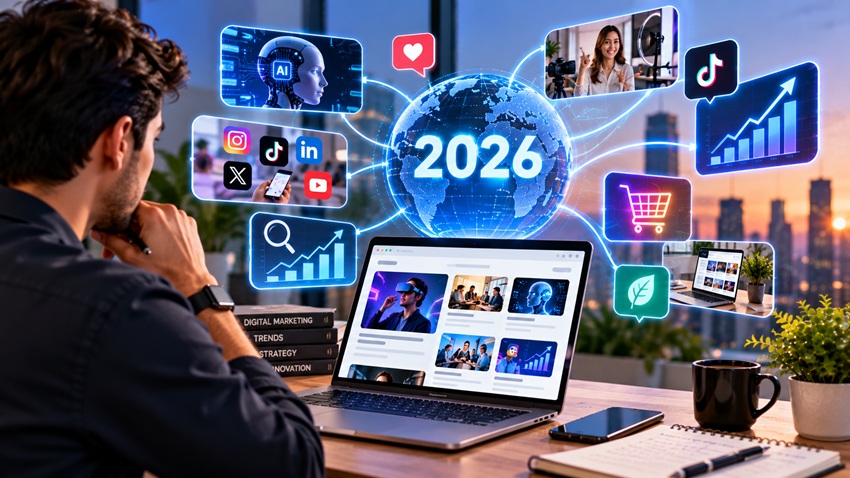
Digital marketing changes constantly — search engines update algorithms, AI tools evolve monthly, social platforms launch new features, privacy rules shift, and consumer behavior moves with them. To stay updated in 2026 without getting overwhelmed: follow official platform sources (Google Search Central, Meta, LinkedIn, TikTok, and others), subscribe to a few trusted industry newsletters and publications, join professional communities, attend webinars and conferences, monitor your own analytics for real changes, test new features in small experiments, use AI tools to summarize news, and build a simple weekly learning routine with a system for sharing insights across your team. The goal isn't to chase every trend — it's to spot the changes that matter for your audience and business and act on them quickly. Here's a practical system.
Why Staying Updated Matters
| Area of Change | Example Impact on Marketing |
|---|---|
| Search algorithms and AI search | Shifts in rankings, traffic, and how answers appear |
| Social platform features | New formats change what content gets reach |
| Ad platform automation | Bidding, targeting, and creative best practices evolve |
| Privacy regulations and tracking | Changes to data collection, consent, and measurement |
| Email deliverability rules | New sender requirements affect inbox placement |
| AI tools | New capabilities for content, analysis, and automation |
| Consumer behavior | New platforms, devices, and buying journeys |
Brands that adapt early often gain an advantage, while those that ignore changes can lose visibility and efficiency.
Step 1: Follow Official Platform Sources
Official sources are the most reliable for confirmed changes:
- Google Search Central blog and documentation for search updates
- Google Ads and Merchant Center announcements
- Meta for Business news and help center
- LinkedIn Marketing Solutions blog
- TikTok for Business updates
- YouTube Creator and Ads updates
- Email provider sender guidelines (Gmail, Yahoo, Microsoft)
Step 2: Subscribe to Trusted Industry Publications
Choose a few reputable sources rather than dozens: established search marketing publications, social media marketing news sites, analytics and email marketing blogs, and newsletters from respected practitioners. Quality and consistency matter more than volume.
Step 3: Join Professional Communities
- LinkedIn groups and professional networks
- Slack and Discord communities for marketers
- Local marketing associations and meetups
- Industry forums and Reddit communities (with healthy skepticism)
Communities surface real-world experiences quickly, but verify claims before acting.
Step 4: Attend Webinars, Conferences, and Courses
Conferences, virtual summits, platform webinars, and certification courses provide deeper learning and networking. Many platforms offer free training and certifications.
Step 5: Watch Your Own Data
Your analytics are the best signal of trends that affect your business:
- Search Console for changes in impressions, clicks, and queries
- GA4 for shifts in traffic sources, devices, and engagement
- Ad platform performance trends
- Email engagement and deliverability metrics
- Social reach and engagement by format
See how data analytics marketing powers modern campaigns and a guide to Google Search Console.
Step 6: Test New Trends in Small Experiments
When a new feature or trend looks relevant, test it with a limited budget or a few pieces of content. Define success metrics up front and scale only what works — see A/B testing: what it is and how to do it right.
Step 7: Use AI to Filter and Summarize
AI tools can summarize articles, release notes, and long reports, helping you scan more information quickly. Always check original sources before making decisions — see AI in digital marketing: what to expect in 2026.
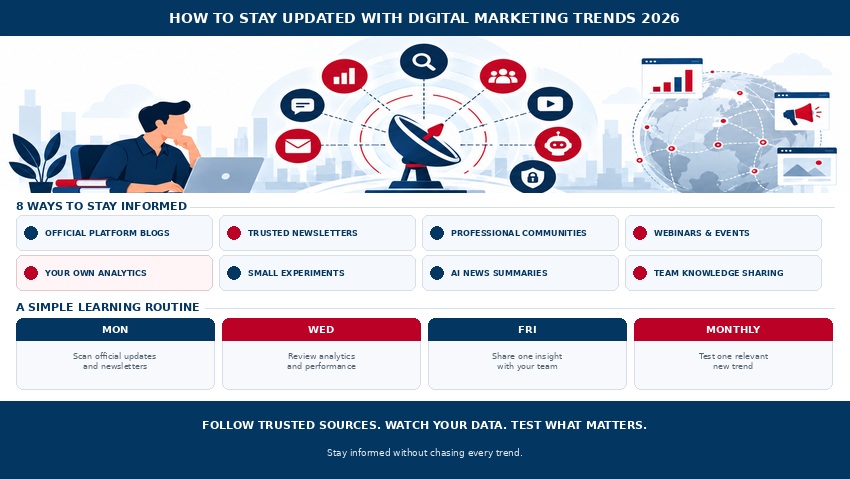
Step 8: Build a Weekly Learning Routine
| Time | Activity |
|---|---|
| 15 minutes, twice a week | Scan official updates and newsletters |
| 30 minutes weekly | Review analytics for unusual changes |
| Weekly team meeting | Share one insight or trend and its relevance |
| Monthly | Run one experiment on a promising trend |
| Quarterly | Attend a webinar or course; update strategy |
Step 9: Separate Signal From Noise
Ask these questions before acting on a trend:
- Is it confirmed by official or reliable sources?
- Does it affect our audience, platforms, or industry?
- Is there evidence of impact, or just hype?
- What would it cost to test?
- How would we measure success?
Step 10: Document and Share Insights
Keep a shared trends log with the update, source, potential impact, decision, and results. This builds institutional knowledge and helps your team respond consistently.
Key Trends to Watch in 2026
- AI-powered search and answer engine optimization — see top 5 SEO trends 2026 you can't miss
- AI agents and automation in marketing workflows
- Short-form video and social search — see the latest social media trends to watch in 2026
- Privacy-first measurement and first-party data
- Email deliverability and authentication standards
- Creator partnerships and community-led marketing
- Personalization at scale with responsible data use
Example: A Small Team Stays Ahead
A three-person marketing team at a regional retailer set a routine: each member followed specific sources (search, social, email), shared one update in a weekly meeting, and logged decisions in a shared document. When an email provider tightened sender requirements, the team had already set up authentication. When a new short-video format launched, they tested it with a small budget and adopted it after strong engagement. Use your real figures to measure the impact of each change.
Common Mistakes
- Chasing every trend without evaluating relevance
- Relying on rumors or unverified social posts
- Information overload from too many sources
- Learning without testing or applying insights
- Ignoring your own data in favor of headlines
- Not sharing knowledge across the team
Staying Updated Checklist
- Official platform sources bookmarked or subscribed
- Three to five trusted newsletters chosen
- One or two professional communities joined
- Webinar or course scheduled each quarter
- Analytics reviewed weekly for changes
- Monthly experiment budget for new trends
- AI summaries used with source verification
- Weekly team insight sharing
- Shared trends log maintained
Turning Trends Into Action
Learning only matters if it changes what you do. For each relevant trend, write a one-line hypothesis ("Short vertical video ads will lower our cost per lead"), assign an owner, set a small test budget and timeline, and review results. Over a year, these small experiments add up to a marketing program that evolves with the market instead of reacting late.
Key Takeaways
- Digital marketing changes quickly across search, social, ads, email, AI, and privacy.
- Follow official sources and a few trusted publications to stay informed.
- Join communities, attend events, and watch your own analytics.
- Test relevant trends in small experiments before scaling.
- Build a routine and share insights to keep your team aligned.
Frequently Asked Questions
How can I stay updated with digital marketing trends?
Follow official platform blogs and documentation, subscribe to a few trusted industry newsletters, join professional communities, attend webinars and conferences, monitor your analytics, test new features in small experiments, and build a weekly learning routine.
What are the most important digital marketing trends in 2026?
Key trends include AI-powered search and answer engine optimization, AI automation in marketing workflows, short-form video and social search, privacy-first measurement, email authentication standards, creator partnerships, and responsible personalization.
How much time should marketers spend learning about trends?
Even an hour or two per week can be enough when it's structured: brief news scans, weekly analytics reviews, team insight sharing, and a monthly experiment on promising trends.
How do I know which trends are worth following?
Prioritize trends confirmed by reliable sources that affect your audience, platforms, or industry, have evidence of impact, and can be tested affordably with clear success metrics.
Can AI help me keep up with marketing news?
Yes. AI tools can summarize articles, reports, and platform updates to help you scan information faster, but always verify details with original sources before changing strategies.
Want a partner who stays ahead of digital marketing changes for you? AiScope Digital's online marketing services keep your strategy current with AI-powered insights — get a free strategy session today.