
A great fashion logo captures a brand's attitude in a single mark — luxury, streetwear, minimalist, sustainable, playful, or avant-garde — and works everywhere from a website header to a woven label, shopping bag, hang tag, and Instagram avatar. Most successful fashion logos rely on refined typography (wordmarks and monograms), restrained color palettes (often black and white), generous spacing, and simple forms that look timeless rather than trendy. To create one, define your brand positioning and audience, study competitors to stand apart, choose a logo type and typography that match your style, design for both digital and physical applications like embroidery and embossing, and build a flexible system with a primary logo, monogram, and labels. Here's how.
Why Logos Matter So Much in Fashion
- Status and desirability: in fashion, the logo can be part of the product itself
- Recognition: a distinctive mark appears on labels, packaging, and social content
- Pricing perception: refined identities support premium pricing
- Storytelling: typography and symbols communicate heritage, attitude, and values
- Licensing and merchandising: strong marks extend to accessories and collaborations
Brand foundations are covered in building a brand: the essential guide to creating a strong brand identity.
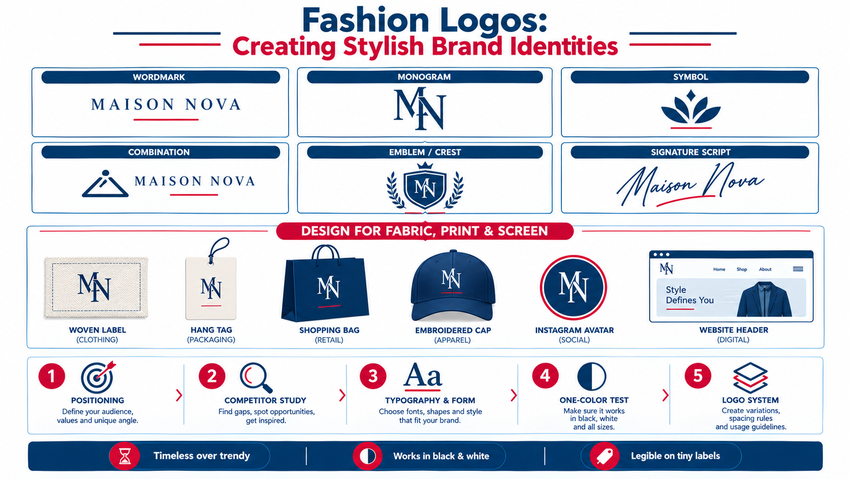
Types of Fashion Logos
| Logo Type | Characteristics | Best For |
|---|---|---|
| Wordmark | Brand name in distinctive typography | Most fashion brands, especially new labels |
| Monogram / lettermark | Interlocking or stylized initials | Luxury, heritage, accessories, repeat patterns |
| Symbol / icon | Abstract or pictorial mark | Sportswear, streetwear, brands with strong icons |
| Combination mark | Symbol or monogram plus wordmark | Brands needing flexibility across products |
| Emblem / crest | Text within a badge or shield | Heritage, preppy, outdoor, and workwear brands |
| Signature / script | Handwritten or designer-signature style | Designer-led and boutique brands |
Wordmark and lettermark details are covered in wordmark logos: crafting memorable text-based logos and lettermark logos: simplifying brand identity.
Matching Logo Style to Fashion Segment
| Segment | Typical Logo Style | Typography and Color |
|---|---|---|
| Luxury / haute couture | Minimal wordmarks, monograms | High-contrast serifs or refined sans; black, white, gold |
| Contemporary / premium | Clean wordmarks | Modern sans-serif or elegant serif; neutral palettes |
| Streetwear | Bold wordmarks, graphic symbols | Heavy sans, distressed or custom type; bold colors |
| Sportswear / athleisure | Dynamic symbols plus wordmarks | Strong geometric sans; energetic accent colors |
| Sustainable / slow fashion | Organic, understated marks | Humanist type; earthy tones |
| Children's fashion | Playful, rounded forms | Friendly rounded fonts; soft or bright colors |
| Bridal and eveningwear | Script or delicate serif | Light weights; ivory, blush, metallics |
Typography: The Heart of Fashion Logos
Many iconic fashion identities are typographic. Key considerations:
- Serif vs. sans-serif: serifs suggest heritage and elegance; sans-serifs feel modern and minimal
- Weight and contrast: thin, high-contrast letters feel luxurious; heavy weights feel bold and urban
- Letter spacing (tracking): wide spacing in all caps creates a sophisticated look
- Custom details: modified letters, ligatures, or unique cuts make the mark ownable
- Legibility at small sizes: labels and tags demand clean forms
Font selection is covered in typography in logos: choosing the right fonts and craft details in the art of type design.
Color in Fashion Branding
- Black and white: timeless, versatile, and works on any garment or packaging
- Neutrals (beige, taupe, grey): understated luxury and minimalism
- Metallics (gold, silver): premium accents for foil stamping and hardware
- Signature color: a single ownable color can become iconic across packaging and stores
- Seasonal palettes: keep the core logo consistent while campaigns use seasonal colors
Design the logo to work in one color first. Color strategy is in mastering color theory in logo design.
The Fashion Logo Design Process
- Define positioning: price point, audience, aesthetic, values, and brand story
- Research competitors: identify visual clichés in your segment and find white space — see research and discovery: laying the foundation for great logos
- Create a mood board: typography, textures, photography, and materials
- Sketch and explore: wordmarks, monograms, and symbols
- Refine typography: kerning, proportions, and custom details
- Test applications: labels, embroidery, embossing, foil, packaging, and digital
- Build the system: primary logo, secondary mark, monogram, and pattern
- Document guidelines: clear space, minimum sizes, colors, and placements
Designing for Physical Applications
Fashion logos live on products, so test production methods:
- Woven and printed labels: tiny sizes require simple, legible forms
- Embroidery: thin lines and small details may not stitch cleanly
- Embossing and debossing: works best with bold shapes on leather and packaging
- Foil stamping: ideal for luxury boxes and tags
- Hardware and engraving: buckles, zippers, and buttons need simplified marks
- Repeat patterns: monograms can become signature prints
Packaging inspiration is in innovative product packaging designs that wow customers.
Fashion Logo Trends in 2026
- Refined minimalism: clean sans-serifs and wide letter spacing continue
- Serif revival: elegant serifs bring warmth and heritage cues
- Custom monograms for accessories, packaging, and patterns
- Responsive logo systems that simplify for avatars and app icons — see responsive logos: designing for different screen sizes
- Motion branding for social and digital campaigns — see animated logos: adding motion to your brand identity
- Sustainable cues: understated marks and natural palettes for eco-conscious labels
Rebranding a Fashion Label
Fashion houses sometimes simplify or refresh their logos to modernize. Evaluate whether you need a light refresh or a full redesign — see refreshing existing logos: giving your brand a new look.
Common Mistakes
- Following trends so closely the logo dates quickly
- Overly detailed marks that fail on labels and embroidery
- Typefaces that look too similar to established luxury brands
- Too many colors or effects
- No monogram or simplified version for small applications
- Skipping trademark checks
Key Takeaways
- Fashion logos communicate attitude, status, and style in a single mark.
- Wordmarks and monograms dominate, with symbols common in sportswear and streetwear.
- Typography, spacing, and restrained color define stylish identities.
- Test logos on labels, embroidery, embossing, packaging, and digital platforms.
- Build a flexible logo system and favor timeless design over short-lived trends.
Frequently Asked Questions
What makes a good fashion logo?
A good fashion logo reflects the brand's positioning and style, uses distinctive and legible typography or forms, works in one color, scales from tiny labels to large signage, and translates well to embroidery, embossing, packaging, and digital platforms.
Why do so many fashion brands use text-based logos?
Text-based logos like wordmarks and monograms emphasize the brand name, convey sophistication, and are versatile across garments, labels, and packaging. Typography can communicate luxury, minimalism, or attitude without needing a symbol.
What fonts are best for fashion logos?
High-contrast serifs and refined sans-serifs are common for luxury and contemporary brands, while bold geometric or custom display fonts suit streetwear and sportswear. The best choice depends on your positioning, and custom modifications help make the logo unique.
Should a fashion brand have a monogram?
A monogram is useful for luxury and accessories brands because it works on small applications like hardware, labels, and packaging, and can become a signature pattern. Many brands pair a monogram with a primary wordmark.
How much does a fashion logo design cost?
Costs vary depending on whether you hire a freelancer, studio, or agency, and on the scope, such as a logo only or a complete identity with packaging and guidelines. Request detailed proposals that include research, concepts, revisions, and file deliverables.
Ready to launch or refresh your fashion brand? AiScope Digital's logo and visual identity design services and branding services create stylish, timeless fashion identities — get a free consultation today.